

Introduction to Dog Training: Mastering the “Sit” Command
Have you ever watched in amazement as a friend’s dog obediently sat down at the simple utterance of “sit”? If you’ve just welcomed a furry friend into your life or are seeking to strengthen your bond with your current pet, learning the basics of dog obedience, starting with the “sit” command, is a great step. This command is not just a party trick—it is an essential part of a dog’s training that lays the groundwork for more advanced commands and helps with their overall behavior.
Why Learning to “Sit” Matters
Mastering Basic Dog Obedience Training Commands: Sit isn’t just about impressing your neighbors. This fundamental command helps to establish your role as the pack leader and sets the stage for a well-behaved pet. It can:
- Enhance safety: Teaching your dog to sit can prevent them from jumping on guests or running into busy streets.
- Improve behavior: It serves as a foundation for teaching other commands and manners.
- Strengthen your bond: Training sessions are quality time spent together, enhancing understanding and trust.
How to Teach Your Dog to “Sit”: A Step-by-Step Guide
Getting Started
Before diving into the steps, ensure you have some treats and your dog’s attention. Training should always be done in a quiet environment where your dog can focus without distractions.
Step-by-Step Training
- Get your dog’s attention with a treat in hand.
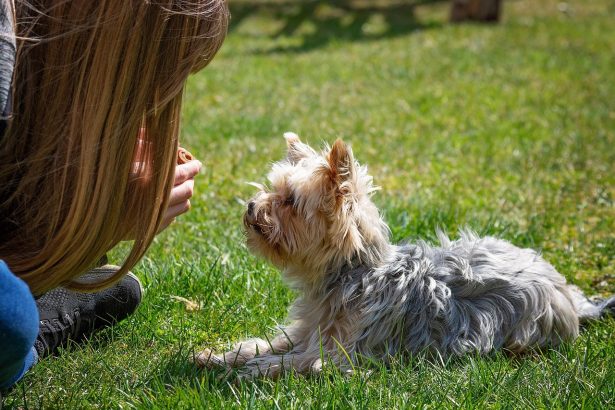
- Hold the treat close to your dog’s nose, and slowly lift it above their head. As their head goes up to follow the treat, their bottom should naturally go down.
- As they are in the process of sitting, clearly say the command “sit”. It’s crucial to say it during the action so they associate the word with the behavior.
- Give them the treat and lots of praise as soon as their bottom hits the ground.
- Repeat several times during short but frequent training sessions.
Tips for Success
- Keep training sessions short; 5-10 minutes is ideal to start.
- Always use positive reinforcement. Praise and treats can make learning enjoyable and effective.
- Be consistent with the command word. Use “sit” every time and ensure all family members do the same.
Addressing FAQs and Common Mistakes
Common Questions
- Q: How long will it take for my dog to master “sit”?
- A: It varies depending on the dog. Consistency and daily practice are key. Many dogs can start responding within a week.
Common Mistakes
- Not being consistent with the command word. Stick to one word to avoid confusing your dog.
- Overloading the dog with multiple commands at once. Master one command before moving to another.
Practical Tips & Actionable Advice
Checklist for Training Your Dog to Sit:
- Have treats and be in a quiet space.
- Use a consistent command word.
- Reward immediately after the dog sits.
Best Practices:
- Train when your dog is alert but not overexcited.
- Gradually reduce treats as your dog starts responding and use verbal praise and petting as the primary reward.
Do’s and Don’ts:
- Do be patient. Dogs learn at their own pace.
- Don’t punish your dog for not sitting. This can lead to fear and confusion.
Wrapping Up: Embrace Patient, Consistent Training
Mastering the “sit” command is the first step in a journey that leads to a well-trained dog. While simple, it reinforces the bond between you and your pet and establishes foundational behaviors that benefit both of you in daily life. Remember, patience, consistency, and positive reinforcement are your best tools.
Happy training! Dive into this rewarding process and watch as your dog grows in obedience and companionship. Don’t hesitate to seek out professional trainers if you encounter challenges, and enjoy the learning journey together with your furry friend!